
FaithTech
FaithTech designs and manufactures programmable DC power supplies and electronic loads for energy, industrial, automotive, electronics, and aerospace applications.
Copyright © 2026 FaithTech
FaithTech designs and manufactures programmable DC power supplies and electronic loads for energy, industrial, automotive, electronics, and aerospace applications.
Copyright © 2026 FaithTech

On Science Island in Hefei, Anhui, there is a device unlike traditional nuclear power plants, yet it carries the hope for humanity's future energy: the Experimental Advanced Superconducting Tokamak (EAST), also known as the "Artificial Sun" (Source: CCTV News). In 2025, EAST achieved another major breakthrough, significantly extending its high-temperature plasma confinement time. Behind this breakthrough, the powerful magnetic field generated by high-temperature superconducting materials plays a crucial role.
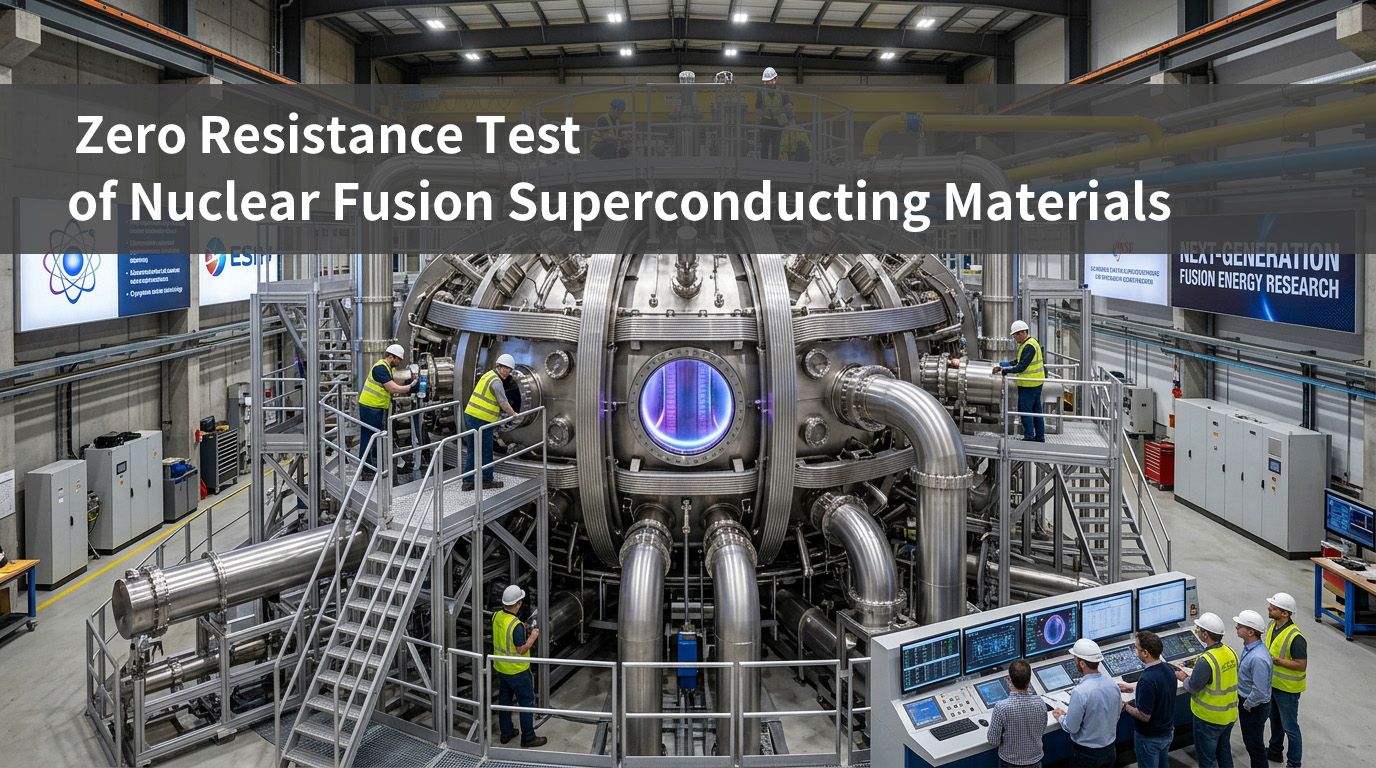
Fusion energy is regarded as the ultimate solution to humanity's energy problems. It mimics the nuclear fusion process within the sun, being clean, safe, and abundant in resources. To achieve controlled nuclear fusion, an environment of extreme temperature and pressure must be created and maintained to allow atomic nuclei to fuse. During this process, the high-temperature plasma must be effectively confined to prevent it from contacting the reactor walls and causing energy loss. Magnetic confinement is the mainstream technology, and superconducting materials, due to their zero resistance and perfect diamagnetism, have become key to generating strong magnetic fields.
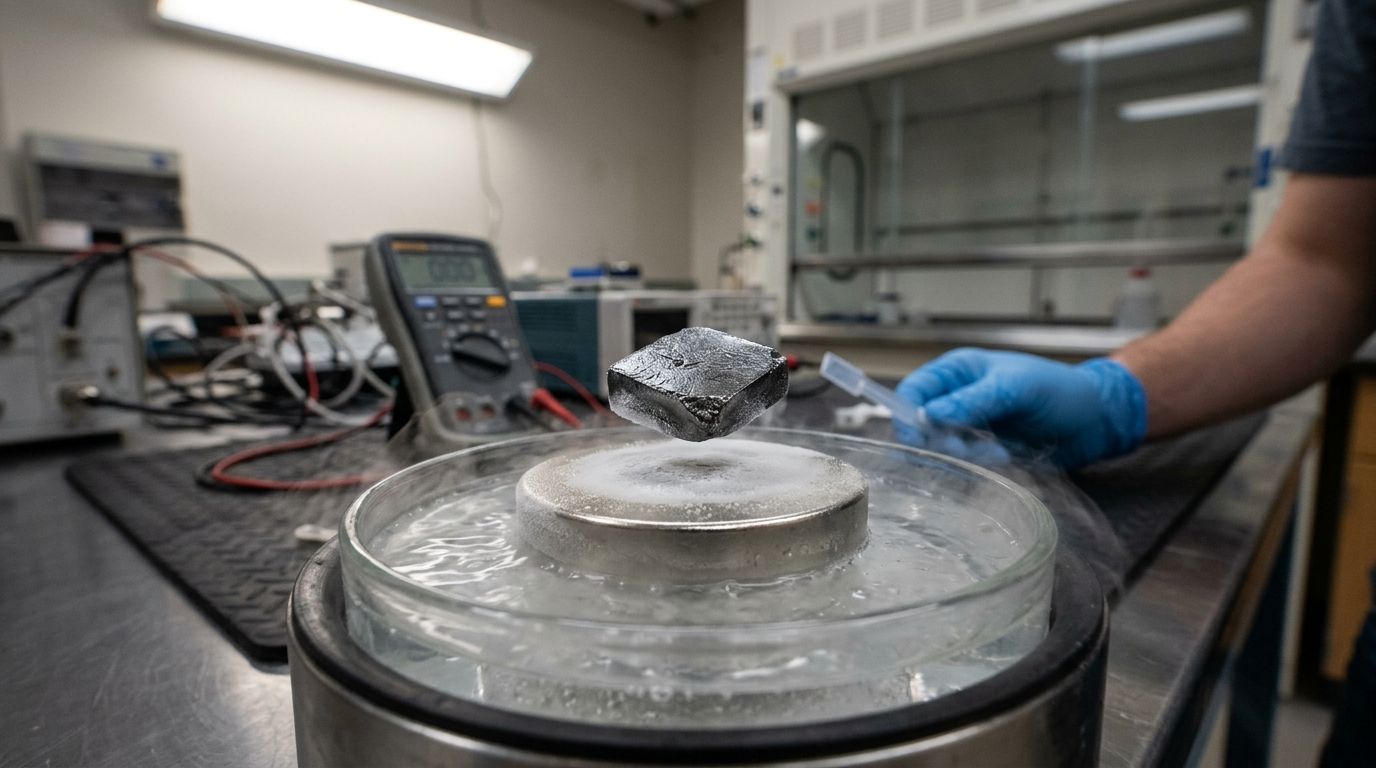
In nuclear fusion devices, the core value of superconducting materials lies in their zero-resistance characteristic—no energy loss when current flows through them, enabling them to generate strong magnetic fields to confine high-temperature plasma.
The power of a nuclear fusion device is proportional to the fourth power of the magnetic field strength. This means that a small increase in magnetic field strength can lead to a significant increase in the device's power output.
The key to verifying the zero-resistance characteristic of superconducting materials lies in testing their critical current—the maximum current that can pass through a superconductor without dissipating energy.
Zero resistance testing of superconducting materials faces multiple technical challenges:
These challenges impose extremely high performance requirements on the test power supply. Traditional power supplies typically have a single-unit current of around 4,000 to 5,000 amperes, making it difficult to meet the testing requirements for high-temperature superconducting materials.
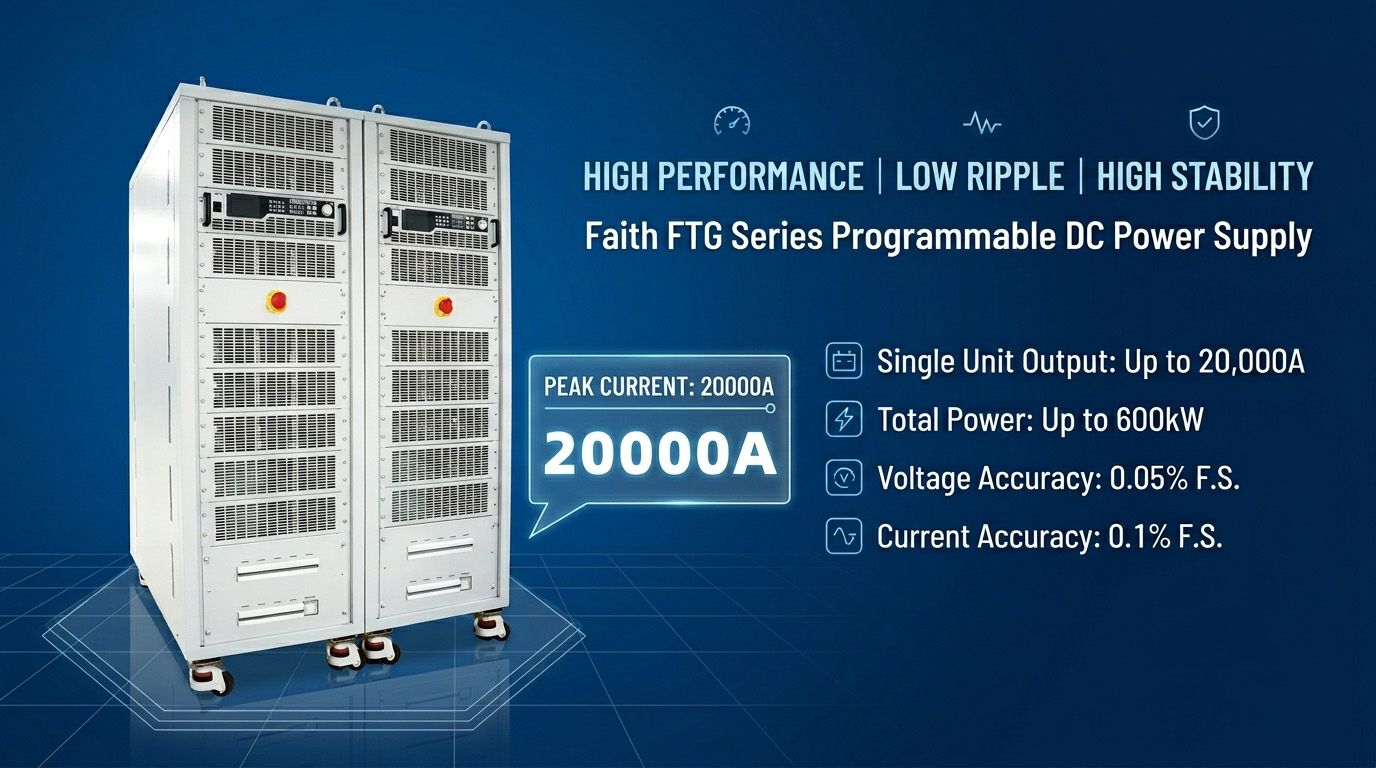
In actual test environments, the FaithTech FTG high-current power supply demonstrates multiple advantages:
FaithTech is a company specializing in the field of new energy power electronics testing and simulation instrumentation. We provide world-class, precise, high-quality full-series test & measurement power supplies, electronic load equipment, and test solutions. Leveraging profound technical accumulation, FaithTech was among the first in the industry to introduce over 10 high-level product series, including high-density high-power electronic loads, wide-range DC test & measurement power supplies, and high-performance high-power bidirectional DC power supplies, achieving performance indicators that reach international leading levels and are sold well in developed countries overseas.
FaithTech is committed to technology frontiers and independent R&D, holding nearly 100 independent intellectual property rights and having obtained CE, ROHS, and ISO 9001 international quality management system certifications.
FaithTech has been honored as a "National High-Tech Enterprise," a "Major Drafting Unit for 4 National Standards including 'High-Power Switching Power Supply Technical Specifications,'" and a "Specialized and Sophisticated SME." With reliable product quality and enthusiastic service, FaithTech has established long-term cooperative relationships with leading companies in the industry.
FaithTech – A High-End Test & Measurement Power Supply, Electronic Load, and Automated Test Integrated Solution Manufacturer